



Many leaders think inspection is what protects quality. If defects slip through, the answer seems obvious: add another check, another review, another pair of eyes at the end. It feels careful. It feels responsible.
But that habit can quietly raise cost, normalize rework, and keep management from seeing the deeper problem. The real issue is not what we catch at the end. It is what our system keeps producing in the first place.
The management trap
One of the easiest mistakes in management is to confuse detection with improvement. When something goes wrong, we naturally look for a way to catch it sooner, sort it faster, or keep it from reaching the customer. That instinct is understandable. It is also incomplete.
A company can become very good at finding defects and still remain trapped in a weak process that keeps making them. W. Edwards Deming said it plainly: “[Using] inspection to improve quality is too late, ineffective, costly.”
[Using] inspection to improve quality is too late, ineffective, costly.
— W. Edwards Deming
The force of that statement is easy to miss. He was not arguing against all inspection. He was arguing against the belief that inspection is where quality is achieved.
Quality is shaped upstream, in design, methods, training, maintenance, scheduling, and in the way management coordinates the whole system.
To see how easily leaders drift into the opposite habit, consider a small manufacturer that had become highly disciplined at catching defects and surprisingly tolerant of producing them.
A small manufacturer, a familiar pattern
Hartwell Fixtures made custom metal display racks for local retailers. It was a solid Main Street manufacturer with a good reputation and steady orders. Elena, the owner, took pride in the fact that every rack was inspected before shipment.
From a distance, that looked like discipline.
On the floor, it looked different.
Welds were sometimes rough. Powder coating occasionally bubbled. Mounting holes did not always line up. None of those issues alone threatened the business. But together, they created a constant drag on the work. Final inspection kept finding defects, and rework kept absorbing time, attention, and overtime.
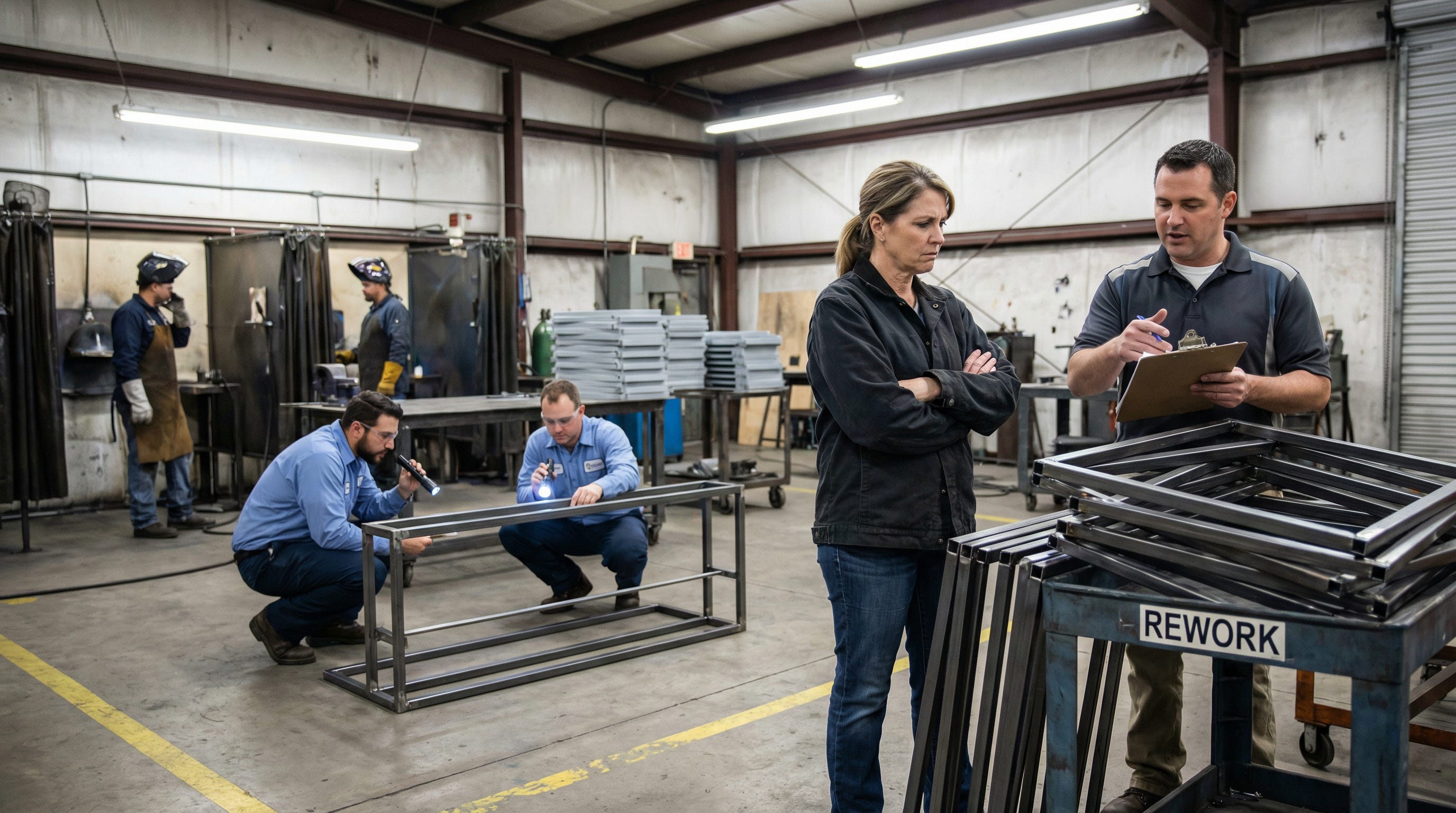
When a shipment was late for the third time in a month, Elena walked into inspection and saw what had gradually become normal: carts full of rework, operators waiting for decisions, and inspectors arguing over borderline pieces.
“What’s the fastest way to get this back under control?” she asked.
Marcus, her operations manager, answered with the logic the company had been living inside for months.
“We are catching most of the bad units,” he said. “If we add one more inspector on second shift, we can clear the backlog.”
That answer was practical. It was also revealing.
More inspection had already been the answer for months. Yet the backlog remained. Scrap was up. Overtime was up. Customers were becoming less patient. Hartwell was not dealing with a few isolated mistakes. It was operating inside a predictable system.
Later that day, Elena and Marcus looked at the recurring defects together. One week the problem centered on drilling. Another week it was coating. Another week it was warped tubing from a supplier. The pattern moved around, but the burden stayed in the same place: at the end, where the company tried to sort, repair, and rescue what the system had already produced.
Deming captured that logic memorably: “Our system of make-and-inspect, if applied to making toast, would be expressed: ‘You burn, I’ll scrape.’”
Our system of make-and-inspect, if applied to making toast, would be expressed: ‘You burn, I’ll scrape.’
— W. Edwards Deming
That was Hartwell’s system in miniature. Make the rack. Find the defect. Grind it. Redrill it. Recoat it. Expedite it. Apologize for it. At some point, the company had confused recovery with quality.
That realization changed the conversation.
“If inspection is our main defense,” Elena said, “then we are planning to make defects.”
“Then where do we start,” Marcus asked, “if not at the end?”
Instead of asking how to strengthen the inspection wall, Elena and Marcus started tracing the defects upstream. They found fixture wear at the drilling station. They reviewed variation in incoming tubing from one supplier. They discovered that a setup shortcut had become normal on busy days. They also saw coating problems rise when rushed scheduling changes caused parts to sit too long between steps.
Inspection did not disappear. But it changed purpose. It became feedback about the process, not the company’s main theory of quality.
Marcus began tracking defect patterns to learn where the system was unstable. Supervisors stopped treating rework totals as proof that quality control was working. Elena stopped celebrating heroic saves that depended on overtime and last-minute sorting.
The result was not perfection overnight. Some defects still appeared. But rework began to shrink. Lead times became more predictable.
Inspectors spent less time debating borderline pieces. Operators had clearer standards and better equipment. Supplier conversations improved. The same people who had been blamed for defects started taking pride in racks that moved through without repair.
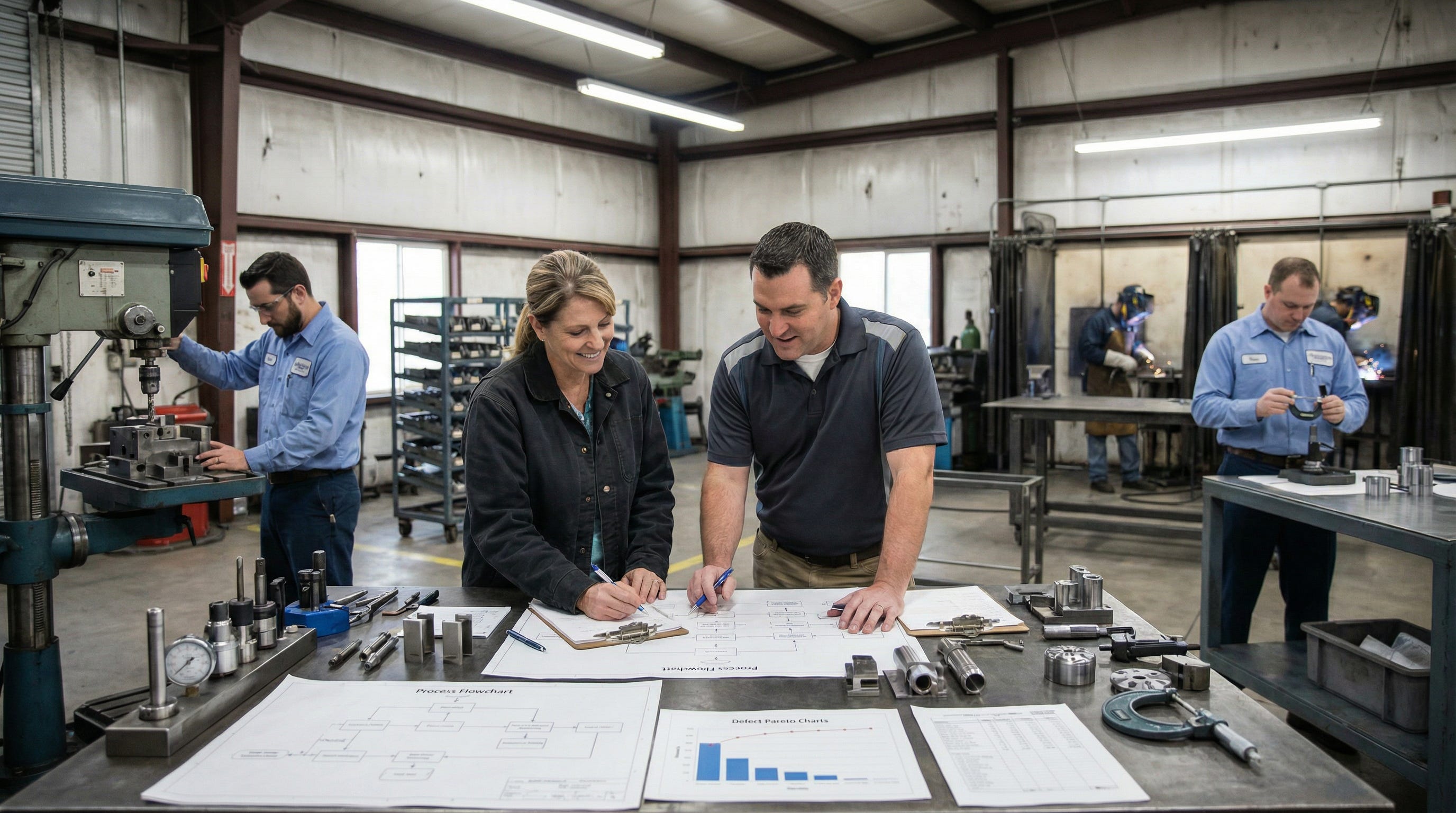
Hartwell did not improve because it got better at catching defects. It improved because management stopped pretending that catching defects was the same thing as creating quality.
Why we fall into this
This pattern is common because it flatters our instincts.
When a defect shows up, we want an immediate answer. We want action we can see. An extra inspection point, another signoff, a tighter approval step, or a fresh reminder to be careful all feel like responsible leadership.
They create motion. They create reassurance. They also let us avoid the harder work of asking what in the system keeps generating the same trouble.
We struggle here because symptoms are visible and systems are not. Rework has a location. Scrap has a number. Inspection has a department.
But the causes are often spread across design, training, maintenance, scheduling, supplier relationships, and unclear methods. No single problem screams for ownership, so we manage what we can see.
We also struggle because detection feels safer than redesign. Catching a defect at the end seems concrete. Improving the process that made it requires thought, patience, and cross-functional cooperation. It asks more of management.
That is why Deming’s reminder matters so much: “The quality of the product is the responsibility of management, working with the customer.”
The quality of the product is the responsibility of management, working with the customer.
— W. Edwards Deming
If we hand that responsibility downward to operators or inspectors alone, we divide accountability in exactly the place it must remain integrated.
The difficulty is not that leaders do not care. It is that we can easily mistake visible control for actual improvement.
What leaders can do instead
Redefine what inspection is for. Inspection can provide useful feedback, but it should not be your main strategy for achieving quality. Treat it as a way to learn about the process, not as proof that the process itself is sound.
Follow defects upstream. When the same kinds of problems keep appearing, resist the urge to respond only at the point of discovery. Ask what in design, methods, materials, training, maintenance, or scheduling is making those outcomes likely.
Stop rewarding recovery more than prevention. Heroic saves feel admirable, but they can hide an unhealthy system. Leaders should be careful not to praise overtime, sorting, and rework more than the quieter work of building stable flow and capable processes.
Keep accountability where it belongs. Operators and inspectors can contribute insight, but they do not control the whole system. Management does. That means leaders have to coordinate across functions instead of treating quality as a department or a final checkpoint.
Remember the business consequence. A system that produces dependable quality does more than lower internal friction. It builds trust, strengthens responsiveness, and becomes a competitive advantage over time because customers learn who they can rely on.
A better question
The hopeful part of this idea is that it gives leaders a better question to ask. Not, “How do we catch more defects?” but, “What kind of system are we asking people to work in?”
That question leads away from blame and toward learning. It leads away from scraping burned toast and toward making good toast in the first place.
And when leaders make that shift, something important starts to come back: calmer operations, better work, pride in workmanship, and trust.
That is where real quality begins.
Improve quality, you automatically improve productivity.
— W. Edwards Deming


